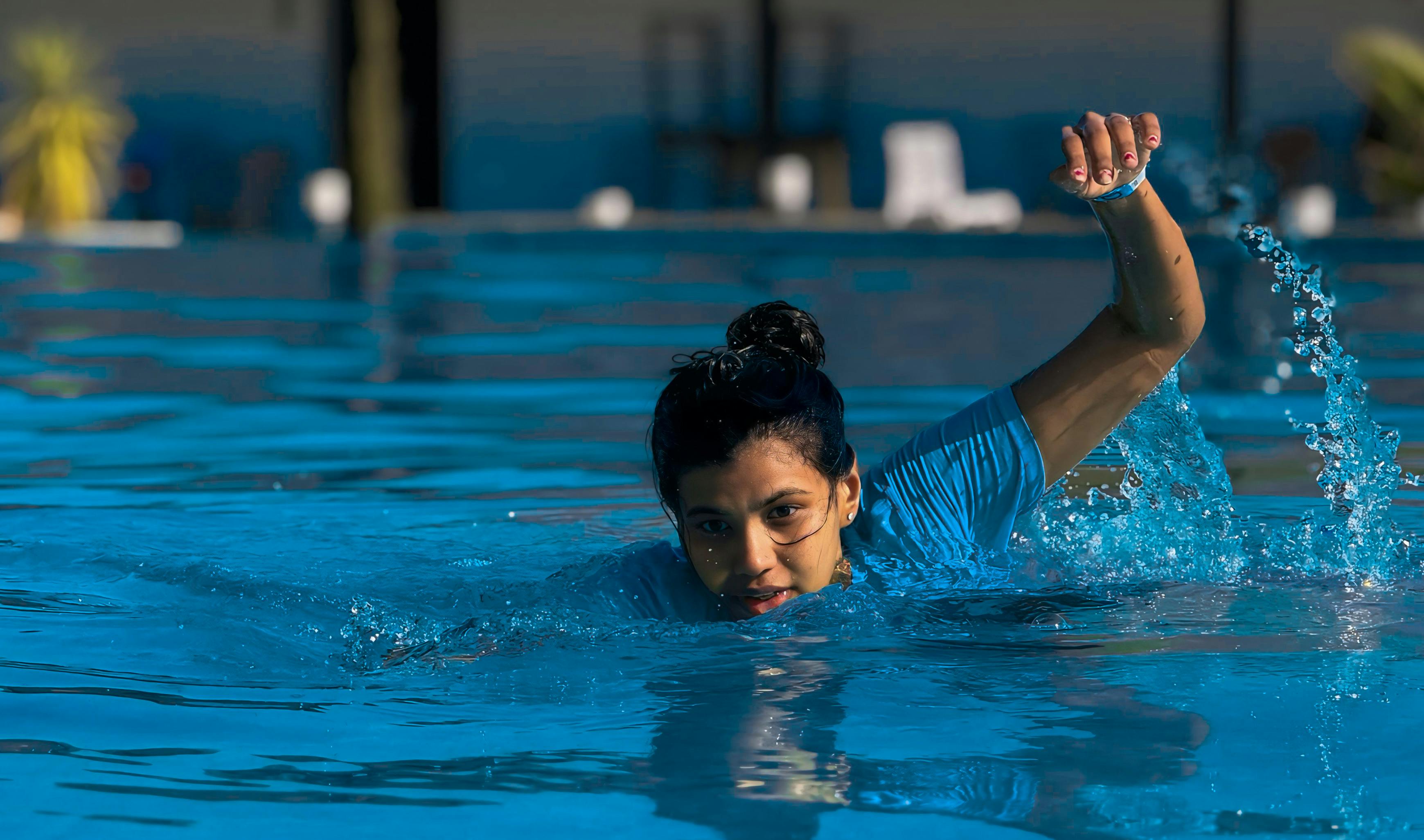
Swimming isn’t just a sport — it’s one of the most complete forms of exercise the human body can do. Low impact, full body, and endlessly scalable. Let’s dive in.
Thank you for reading this post, don’t forget to subscribe!
—## 🌟 Why Swimming is One of the Best Exercises for Your Health
Unlike running or weightlifting, swimming works your entire body simultaneously while placing almost zero stress on your joints. It’s the rare exercise that almost anyone — regardless of age, fitness level, or physical condition — can do consistently for decades.
- 🦴 Joint-Friendly – Water supports up to 90% of your body weight, making it ideal for people with arthritis, injuries, or chronic pain
- 💪 Full-Body Workout – Engages arms, legs, core, back, and cardiovascular system all at once
- 🧠 Mental Health Benefits – Rhythmic breathing and movement have proven stress-reducing effects
- 🔥 High Calorie Burn – A 30-minute moderate swim can burn 200–400 calories depending on intensity
- ❤️ Heart & Lung Health – One of the most effective cardiovascular exercises available
❤️ Cardiovascular Health
Swimming is an outstanding aerobic workout that directly strengthens your heart and lungs.
What happens to your body:
- Your heart becomes more efficient at pumping blood with each stroke
- Lung capacity increases as you practice controlled breathing patterns
- Resting heart rate drops over time — a key marker of cardiovascular fitness
- Blood pressure can decrease significantly with regular swimming
How to train for heart health:
| Intensity | Description | Example Set |
|---|---|---|
| Low | Easy, conversational pace | 10 × 50m with 20 sec rest |
| Moderate | Slightly breathless, sustainable | 5 × 100m with 30 sec rest |
| High | Hard effort, short bursts | 8 × 25m sprint with full rest |
💡 Target: Aim for 150 minutes of moderate or 75 minutes of vigorous swimming per week — consistent with WHO cardiovascular health guidelines.
🏋️ Muscle Strength & Toning
Water is approximately 800 times denser than air, meaning every single movement in the pool is a resistance exercise. You’re essentially doing a full-body strength workout every time you swim.
Muscles worked by stroke:
| Stroke | Primary Muscles |
|---|---|
| Freestyle | Shoulders, lats, triceps, core, hip flexors |
| Backstroke | Upper back, shoulders, glutes, hamstrings |
| Breaststroke | Inner thighs, chest, triceps, quads |
| Butterfly | Core, chest, shoulders, lower back |
💡 For balanced muscle development, rotate between strokes rather than swimming freestyle exclusively.
⚖️ Weight Management
Swimming is a surprisingly effective tool for managing body weight — but it works differently than land-based exercise.
Calorie burn estimates (per 30 minutes):
Leisurely swim: ~180 caloriesModerate freestyle: ~250 caloriesVigorous lap swim: ~350 caloriesButterfly stroke: ~400+ caloriesWater aerobics: ~150 calories
Key points to know:
- Swimming increases appetite more than running or cycling — be mindful of post-swim nutrition
- Muscle gain from swimming raises your resting metabolism over time
- Consistent swimming reduces visceral fat (the dangerous fat around your organs)
- Combine swimming with a balanced diet for the most effective weight management results
⚠️ Don’t out-swim a poor diet. Swimming is powerful, but nutrition is still the foundation of weight management.
🧠 Mental Health & Stress Relief
Few exercises match swimming’s ability to calm the mind. There’s a reason many swimmers describe the pool as their therapy.
Why swimming helps your mental health:
- Rhythmic movement activates the parasympathetic nervous system — your body’s natural calm response
- Controlled breathing mimics meditative breathing patterns, reducing cortisol (stress hormone) levels
- Blue mind effect — being in or near water has been scientifically shown to reduce anxiety and increase wellbeing
- Endorphin release after a good swim creates a natural mood boost similar to a “runner’s high”
- Digital detox — no phones, no screens, just you and the water
💡 Struggling with anxiety or stress? Try an easy 20-minute swim with no watch, no goals — just focus on your breath and the sensation of the water.
🦴 Joint & Bone Health
Swimming is uniquely valuable for people who struggle with high-impact exercise.
Who benefits most:
- People with arthritis – water reduces joint compression dramatically
- Those recovering from knee, hip, or back injuries
- Older adults – maintains mobility and range of motion safely
- Overweight individuals – allows exercise without joint strain
- People with fibromyalgia or chronic pain conditions
Range of motion benefits:
Regular swimming naturally improves flexibility in the:
- Shoulder and rotator cuff
- Hip flexors and hamstrings
- Ankle and foot joints
- Thoracic spine (upper back)
✅ Even 2–3 sessions per week of gentle swimming can significantly improve joint mobility over 8–12 weeks.
😴 Sleep Quality
One often-overlooked benefit of regular swimming is dramatically improved sleep.
- Aerobic exercise like swimming raises core body temperature, and the subsequent cooling effect signals the brain that it’s time to sleep
- Regular swimmers report falling asleep faster and experiencing deeper sleep cycles
- A 2010 study found that older adults who swam regularly reported significant improvements in sleep quality and daytime alertness
- The physical exhaustion combined with mental calm creates ideal conditions for restorative sleep
💡 Best timing: Morning or early afternoon swims tend to improve nighttime sleep more than late-evening sessions.
📅 Building a Healthy Swimming Routine
You don’t need to train like an athlete to see real health benefits. Consistency beats intensity every time.
Beginner health routine (3 days/week):
Day 1 — Foundation 200m easy freestyle warm-up 4 × 50m kickboard (30 sec rest) 4 × 50m easy freestyle (30 sec rest) 200m easy cool-down Total: ~1,000m | ~30 minutesDay 2 — Endurance Focus 200m warm-up 6 × 100m moderate freestyle (45 sec rest) 200m cool-down Total: ~1,000m | ~35 minutesDay 3 — Mixed Strokes 200m warm-up 2 × 50m backstroke 2 × 50m breaststroke 4 × 50m freestyle (30 sec rest) 200m cool-down Total: ~1,000m | ~35 minutes
Progression guide:
| Stage | Frequency | Weekly Distance | Goal |
|---|---|---|---|
| Beginner | 2–3x / week | 1,000–2,000m | Build habit & base fitness |
| Intermediate | 3–4x / week | 2,000–4,000m | Improve endurance & technique |
| Regular | 4–5x / week | 4,000–8,000m | Performance & body composition |
🥗 Nutrition Tips for Swimmers
Swimming and nutrition go hand in hand. Here’s how to fuel your body properly:
- 🍌 Pre-swim (1–2 hrs before): Light carbohydrates — banana, oatmeal, toast
- 💧 During swim: Hydrate! You sweat in the pool even though you don’t feel it
- 🥚 Post-swim (within 30–60 min): Protein + carbs — eggs on toast, yogurt with fruit, protein shake
- ❌ Avoid: Heavy meals within 1 hour of swimming — cramps and discomfort will follow
- 🧂 Electrolytes: Long sessions (60+ min) deplete sodium and potassium — replenish accordingly
🌡️ Swimming at Every Stage of Life
One of swimming’s greatest strengths is that it truly works for every age and body.
| Life Stage | Key Benefit |
|---|---|
| Children | Motor skills, coordination, water safety |
| Teens | Cardiovascular fitness, discipline, stress relief |
| Adults (20s–40s) | Body composition, endurance, mental health |
| Middle age (50s–60s) | Joint preservation, heart health, flexibility |
| Seniors (70s+) | Balance, mobility, injury prevention, social connection |
✅ Key Health Benefits — Quick Summary
| Benefit | Impact |
|---|---|
| ❤️ Heart health | Lowers resting heart rate & blood pressure |
| 💪 Muscle tone | Full-body resistance training every session |
| ⚖️ Weight control | Burns 200–400+ calories per 30 minutes |
| 🧠 Mental health | Reduces stress, anxiety & depression symptoms |
| 🦴 Joint health | Near zero impact on knees, hips & spine |
| 😴 Sleep quality | Deeper, faster, more restorative sleep |
| 🧬 Longevity | Regular swimmers have lower all-cause mortality rates |
🏊♀️ You don’t have to swim fast. You don’t have to swim far. You just have to get in the water — regularly, consistently, and with intention. The health benefits will follow.